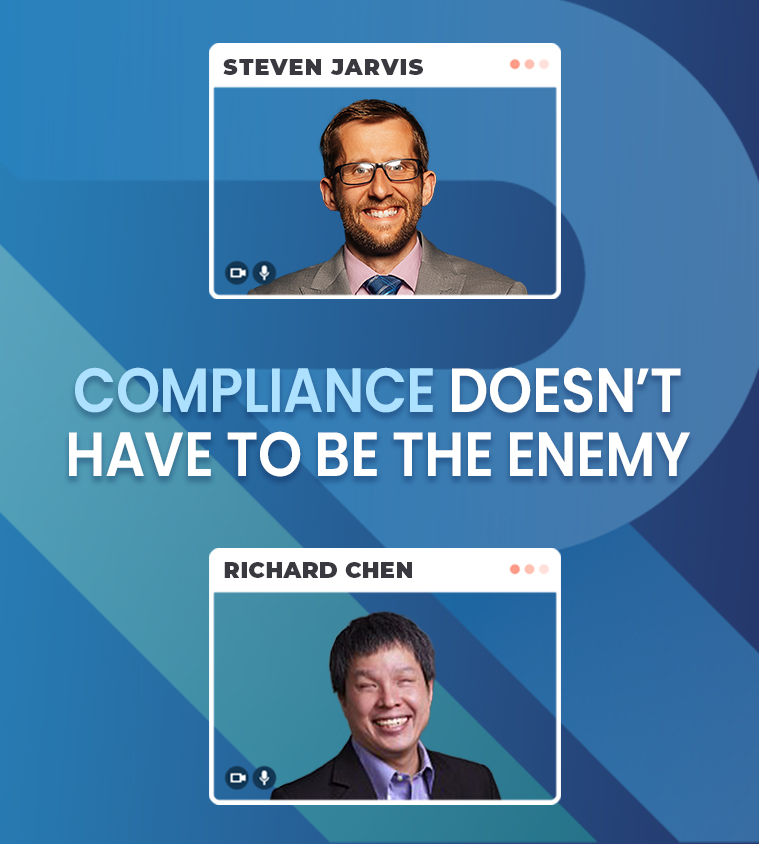
Steven Jarvis is joined by compliance attorney Richard Chen to break down what compliance really means for financial advisors. They discuss how to balance providing value without crossing regulatory lines, the limitations of relying on software, and the importance of protecting client data. Richard reframes compliance as a core part of serving clients well, not something to avoid, but something to approach with clarity and simplicity.
Steven and his guests share more tax-planning insights in today’s Retirement Tax Services Podcast. Feedback, unusual tax-planning stories, and suggestions for future guests can be sent to advisors@rts.tax.
Are you interested in content that provides you with action steps that you can take to deliver massive tax value to your clients? Then you are going to love our powerful training sessions online. Click on the link below to get started on your journey:
Retirementtaxservices.com/webinars
Thank you for listening.
Steven Jarvis, CPA (00:51)
Hello, everyone, and welcome to the next episode of the retirement tax services podcast, financial professionals edition. I’m your host, Steven Jarvis, CPA, and I am very excited for this week’s episode because I get some actual authoritative feedback on a question we get all the time, which is…What do we actually need to understand as financial advisors about compliance? So joining me this week to have a conversation is Richard Chen, who is an attorney that specializes in compliance for RIAs. Least, Rich, I hope I sort of got that right. Why don’t you give us a little background as far as exactly what it is that you do to help RIAs and kind of how you’ve arrived at this is the service I provide.
Richard Chen(01:27)
Yeah, thank you so much, Steve, for having me. I’m so excited to be on the podcast and to share what we do at BrightStar. BrightStar is a firm I’m founder of. It’s just had its seventh anniversary. We serve roughly 450 clients, 95% of which are in the RIA space. So this is what we do. And the work falls into two sort of broad buckets. One is regulatory and compliance and one is corporate. But I think that they kind of go hand in hand. But when we’re talking about compliance, we tackle it from several perspectives. One is with respect to understanding, these are the obligations that you have to follow. And sometimes that requires interpretation of laws. But then there’s a certain amount of blocking and tackling where you just need to have these processes and systems like you would for anything else in business in order to make it effective right, and to lower risk. So there’s an operational component too. I like to tell folks that, know, it’s compliance is, it definitely does have that legal component as a law firm practice. I think that, you know, we have some, of a benefit because, you know, we interpret laws all day long. But in reality, I think it really scares people, right? Because some people, are scared of it. And some people, and in that vein, you know, it creates a paralysis and some people are too cavalier about it. You know, we can, we can kind of tell. I think that there, there’s a, there’s a right balance to have in terms of understanding compliance. And, and I always like to tell people it’s important to start at the very top, right? Understand what the core obligations are, the fiduciary duty of care to act in the best interests of clients, and then the fiduciary duty of loyalty, which is basically make sure you’re providing appropriate disclosures to your clients and make sure you’re sort of disclosing and managing your conflicts of interest. A lot of the stuff that flows from that is important to understand at a conceptual level.
Richard Chen (03:18)
But I think what happens is sometimes people get trapped in the weeds, and then they sort of build out these never-ending processes that are impossible to follow. And so I’m one of the people who oftentimes tell people you have way too much in here because it is impossible to follow this, unless you have like basically you do this like all day long and this is what you do. And I think the reality is that when you put policies and procedures out there, regulators see it and they’re like, okay, are you following this? Right? And I always tell people like, you’re better off putting sort of broad conceptual things and having underlying sort of processes that you sort of follow, but you’re not like, hardwiring yourself into a rigid process that if it changes,
you know, and your manual is out of date, you’re not going to get in trouble for it. Right. So more often than not, that’s the bigger problem we typically say.
Steven Jarvis, CPA (04:07.662)
Rich, since I’m the tax nerd here, let’s use a tax example to kind of try to work our way through a question that often comes to mind for me when it comes to compliance, because we were talking about before we hit record, everybody in the industry knows the word compliance, but I feel like people use it in all sorts of different ways. Some people use it as an excuse to not do things. Some people are, the boogeyman and they’re scared of it. But when we think about compliance, probably the most common example that advisors give me of I’ll use very sarcastic air quotes here, but being compliant when it comes to tax planning is basically ending any conversation with, go ask your CPA. I get where the idea comes from and I am all for collaboration, but let’s talk really specifically here. Like if we just generically end a sentence with, go ask your CPA, have we really accomplished anything?
Richard Chen (05:04)
Well, think it’s one of those things that it depends on what’s in the middle there, right? Like how much are you really adding value? Because I think it’s one of those things that it is so important to RIA work to understand the tax components. Now, of course, you don’t necessarily have to be an expert at it, but I think that people really do expect that you have baseline knowledge. There’s a way to provide that without sort of crossing the quote-unquote tax advice line where people are like, I’m not giving tax advice, right? You can underscore basic tax concepts, right? And help people to understand these are the concepts that are important to you. You know, and now I think that, you know, you need to bear these in mind and, and as you need to, you know, talk to your accountant about, you know, specifically how they might come into play. But I don’t think that there’s anything wrong with saying, I think that these are concepts that can be super helpful to you. Let’s sort of figure out sort of where you are. Right. And, let’s sort of double check, you know, and, you know, we can, we can give you some initial thoughts, but of course, for the definitive advice, sort of make sure you confirm with your CPA. But invariably, even in our practice, I think oftentimes people wanna know that you’re like equipped to handle those types of inquiries because it is part of their financial picture, right? And so I understand it’s easy to get scared and say, okay, I’m not giving tax advice. But I think at the end of the day, there is some element where, you need to provide some like tools and sort of education, right? Education is different from advice, right? In the concept there. And so I think it behooves folks to, advisors who are trying to demonstrate value to provide those pieces of sort of knowledge to clients.
Steven Jarvis, CPA (06:56)
Yeah, I really like how you frame that as well. It really depends on what’s in the middle. What else goes around that statement? Because I’m all for that, because like I said before, I’m not opposed to the collaboration, but to me, it says a lot about how serious the advisor is about delivering value to their clients. If that recommendation that someone asks their CPA comes with, and here’s how we’re going to help facilitate it, or we provide the information they need to have a meaningful conversation. Rich changing gears just a little bit i mean one of the things that i think can be a bit of a double-edged sword when it comes to taxes specifically is the proliferation of tax software that’s out there and similar to the idea of compliance in general i see advisors kind of taking a couple different approaches i definitely see the advisors who it seems like they get this false sense of security yeah well hey if it went through software then i’m covered and so i’d love your thoughts on that side of it of like hey If does it really as the advisor from from a legal perspective, a compliance perspective, does it does it really give me any added protection that I ran it through software? Is it still ultimately my responsibility?
Richard Chen (08:00)
Yeah, think that software gives a, and this is probably true of AI in general, right? Is that you have the ultimate responsibility to make sure it’s correct, right? Because software has only the inputs that you give it. Unfortunately, there are decisions that you make about taxes that require a judgment call, which software is typically not going to give you. Right. And so I think it’s important to understand that there are limitations in terms of what software can do for you. It’s obviously super helpful. Right. But, know, as with any tool, you need to double check the outputs. You need to make sure that it, you know, whatever is being processed through software has the appropriate level of context that you can, you know, feel confident that the results that are coming out are you’re appropriate. It’s like trust but verify, you need to do the extra work on the back.
Steven Jarvis, CPA (08:56)
Trust but verify might be the first thing they taught us when I went to school for accounting. I definitely heard that a lot. And it rings true. Software is a great tool. I’m not anti-software at all. I use all the time. But like you said, ultimately the responsibility is still ours. So got to make sure that if we’re using tools, we still take responsibility as the operator of those tools.
Richard Chen(09:12)
100% yeah, because I mean, there are limitations in terms of what it does you know, and we have to be aware.
Steven Jarvis, CPA (09:20)
Yeah, absolutely. Yeah, well, it’s kind one those interesting dichotomies with tools, especially powerful tools that they allow us to go faster. They give us more ability to do things. But yeah, I have a 13 year old son. He recently upgraded from a very small RC car that would go like 15 miles an hour to he bought this RC car that will go 60 miles an hour almost instantly, which I, of course, immediately smashed right into a concrete wall because I didn’t didn’t practice. I didn’t show it gradually escalate and… That’s the analogy that comes to mind with some of the software and AI tools that are out there. Just because it’s powerful doesn’t mean you should go full power on.
Richard Chen (09:55)
100%. 100%. Yeah. I, I 100 % agree with that. think, you know, one of the things that I think oftentimes people sort of don’t necessarily do is truly understand what the software does, how it works, and just as importantly, like what are the settings you need to actually sort of put in place to make sure it’s functioning the way you want it to, right? Because these things can come with a lot of customization, but if you don’t customize it properly, it’s going to behave in ways that maybe you’re not like what you like really intended it to.
Steven Jarvis, CPA (10:26)
Yeah. Rich, as you work with RIAs, how much of your time is spent helping people prevent messes versus cleaning up messes?
Richard Chen(10:32)
Thank God most of the time is preventing messages, the message. So I think, you know, we’re very, very strong on process simplicity, right? I think that both of those elements are super important. I’m one of those people who believes that complexity breeds risk. So I like to tell people, try to keep it simple, you know, because the more complexity you bring into the equation, more likely you’re gonna mess up, right? And at the same time, you know, it’s, it’s, it’s keeping, you know, sort of a certain procedures in mind that you’re, you’re following and you sort of, you know, try to build habit around, you know, sort of what you’re doing. And that will, you know, go a long way to, preventing, you know, sort of problems that that ended up happening now, of course. You know, nothing’s foolproof. I, you know, I’m the first person to tell, you know, any regulator, like, there’s no such thing as a perfect compliance program because we’re all human, right? And so I think, you know, I try to sort of understand that, but you know, the problem isn’t when you make a mistake in compliance, it’s when you don’t learn from it. And so I think the core is like, how do you respond if something goes wrong? And, you know, if anything, think regulators appreciate the fact that when you point out, you know, it’s like, look, you we weren’t perfect. We did this, but this is what we changed in order to make sure that we were, you know, more effective going forward in terms of what we need to do.
Commercial (11:55)
Text RTS to 55123.
Steven Jarvis, CPA (13:20)
Yeah, I like that. How you phrase that in there of we’ve got to make sure we’re learning from it because it really, regardless of what business you’re in, it’s not a matter of if something goes wrong, it’s when. Like none of us are perfect. And my experience, I’m curious your thoughts, my experience, even whether I’m working with advisors or clients, people don’t actually expect perfection. They expect you to take responsibility. 100%. Now they expect a high degree of quality, but that doesn’t mean we can just mess everything up and keep apologizing to your point about learning from it. But the expectation isn’t perfection, but we gotta have systems in place to learn as we go to make sure we’re minimizing these mistakes for sure. Rich, you mentioned before that it can happen where people get a little cavalier about kind of where they’re at with compliance and what they have in place. And we all have our spots in life where we kind of, don’t know what we don’t know. So how does a person listening to this, like take that step back and evaluate like… What do I need to change when I need to bring someone to help me change these things? How do you identify your blind spots?
Richard Chen(14:16)
Yeah, that’s a good question. And that’s like super, super hard because you’re trying to identify blind spots at the same time, trying to figure out, like, how much do you need? And I think probably the best way to do that is to talk to other people who are in a relatively similar place as you are, right? Because they’ve gone through it and it’s sort of their baseline in terms of where they originally came from, is probably super helpful. And understand sort of what tax that they take and did they find it effective, right? The other thing I think is super helpful is interview a bunch of different people. I wrote an article a few years back called, How to Pick a Compliance Consultant, because I realized that this is a very tough exercise. There’s a variety of different options out there at different price points and different service levels, but it can be very, very daunting. So I wrote this article to try to help folks understand, you know, sort of what the landscape kind of generally looks like, because I think that, you know, some folks think, well, okay, well, you know, compliance consultant is a compliance consultant, but it’s definitely not true. And I also have a heart for folks because it’s also super hard to tell, like who’s good. And so talking to other people I think is super important. But I mean, I hope that that article is helpful too.
Steven Jarvis, CPA (15:37)
It is really challenging and regardless of the topic,I think you nailed it on the head. Find other people in similar situations to you that have been through this. That’s why even though I like being able to do a virtual podcast, I run my firm virtually, it’s why we were so adamant to create an in-person event around this topic because there is nothing like being able to sit with other people doing what you’re doing. And even though we think we do a great job of putting experts on stage, like we make sure those experts have real world experience. And then we create lots of break time where you can talk to the person next to you. Because while I work with, geez, I’m sure I’ve talked to thousands of advisors at this point, I am still not a financial advisor myself. So there are still relatively simple questions that come up where I have to say, yeah, I’ve never done that before. In fact, just this last week, a question came up about like the actual process of distributing an RMD. I have never done that. I have calculated the taxes, I’ve calculated the RMD amount, like I’ve helped people correct missed RMDs as far as the tax reporting. I have never gone to Fidelity or Schwab, Altruist or Betterman, or any of these and initiated the paperwork. Just haven’t done it. I’m not an advisor. And so there are things that you’re only going to learn if you talk to other people doing the thing that you do.
Richard Chen(16:48)
Yes, 100 % agree with you. And I think that that in-person element is super important. mean, as great as Zoom is and effective it is, there’s something about being in person and having the one-on-one conversation where you’re fully committed, like, is where we are, and being able to share and go back and forth in terms of, so I think that’s super great.
Steven Jarvis, CPA (17:09)
Yeah, so for anybody who’s not already signed up, go out to retirementtaxservices.com, get signed up for the summit this fall. It’s going to be incredible yet again. Rich, as you work with RIAs on compliance, are there tax-related questions that you get asked? I hear from advisors who are thinking about starting their own tax practice in-house. What kind of things are you hearing?
Richard Chen(17:27)
Yeah, so, you know, so I started writing more about this because we started to see more of this and there’s definitely stuff on the tax side that that’s important depending on sort of what type of tax practice you have. But one of the sort of core concepts is making sure you’re protecting that private that information of your clients because, you know, it shocked me when I first sort of discovered the need to get the seven section 72, 16 consents and it’s technically it’s a criminal offense, believe it or not, to actually share clients’ tax information, even if it’s with an affiliate without their consent. And I was like, whoa, we have to get this out there. And so that’s definitely right at the top in terms of what’s important to make sure folks have in place, is that consent. And of course, think broad consent.. Concept wise, if you do have conflicts with respect to how you’re recommending other services and things like that, it’s important to get that stuff. But I think the privacy, client privacy and consent thing is what really, really hit me from a compliance perspective.
Steven Jarvis, CPA (18:27)
Yeah, I appreciate you pointing that out because for people who aren’t familiar with the tax roll, this will come as a surprise because as a CPA, as a tax preparer, the IRS has very prescriptive language on not just that I have to have permission, but how I get that permission. And so I work alongside a lot of financial advisors. So this is to your point before. This is part of our process. When a client signs up, we ask them to sign an information sharing consent form. We cannot make that a prerequisite to them working with us. That’s very clear in the IRS rules. And then in that consent, it’s a one page document, but in that consent, I have to provide the client with the information on how they could report me for violations of these rules if they feel like I’m forcing them into this. So it includes, here’s the phone number to call, here’s how to report me. So it’s incredibly prescriptive, which is for advisors who have tried to get tax returns directly from their clients tax preparers, if they get pushed back, that’s why. Yeah, there’s so much. There’s so much kind of like fear and apprehension and I don’t blame the tax preparers. There’s ways to have systems in place for this. But if you just randomly ask me to start sharing clients tax return information with you, it’s like, no, no, no, I’m not going to jail for you.
Richard Chen (19:29)
No, I mean, it’s very different if like your core just like all just what you’re doing is tax preparation. But most RIAs because they are, you know, sort of part of the benefit of the tax practice is that it allows for, you know, sort of enhanced like visibility into financial planning, things like that. That involves sharing, right? Whether or not it’s with, you know, whether or not it’s within the same practice, it’s still sharing for a non-tax related reason.
Steven Jarvis, CPA (19:52)
Well, and just so we’re putting a really fine point on this, so what you’re describing there, if I’m understanding correctly, because I think I’ve seen some of your posts on this. if I’m an advisor and I’ve been doing wealth management for years and I decide, hey, a tax practice would really boost the benefits I provide to my clients. And so for liability purposes, for compliance purposes, I set up a separate legal entity for my tax practice. Even though I own both firms, I have to set up information sharing consensus between those entities, right? I’m saying that right.
Richard Chen (20:21)
And not only that, I think you have to make sure that there’s appropriate segregation, especially if not all the personnel are, you know, sort of 100% overlapping, right? You need to make sure there are proper access controls in place.
Steven Jarvis, CPA (20:34)
Yeah, there are advisors out there doing a really great job of doing in-house tax prep. But for the advisors who are thinking about that but haven’t done it yet, please don’t assume this is as easy as setting up Rich Chen Tax Preparers LLC. If you’re an advisor who wants to do tax prep, have got to do this too. Let’s go back to your recommendation before. Find another advisor who’s gone through this. Ask them what they did. Ask them who they worked with. Ask them where they ran into trouble. Make sure you’re going in really knowing what’s coming at you.
Richard Chen(21:02)
And I think part of the thing that’s shocking for most RIAs is because most of them, know, see if you’re SEC registered, you operate under regulation SP, which is simply like a privacy notification. Like this is what we’re going to do with your information. You only need an opt out if you’re getting marketing to an unaffiliated party. Well, in tax practice areas, much, much more restrictive.
Steven Jarvis, CPA (21:23)
When we set this all up, so we’ve been, we’ve been working alongside financial advisor for about five years now. And when we set this all at the beginning, like as we were going down that route and kind of understanding this, uh, we had to make it really clear to the advisors like, Hey, even though, even if you send me tax information about clients that you think we’re working together on and tell the client signs that form, I can’t send you back the information you just sent to me. Like I have different rules that I’m beholden to… And so for whether advisors are looking at doing this in-house or they just want to better collaborate with other tax providers, understanding that compliance environment can really help inform that relationship.
Richard Chen(21:68)
100%. Yeah, yeah. It’s definitely, yeah, especially nowadays with client privacy, you know, it’s such top of mind because there’s so many sort of hacks and breaches nowadays, you know, it’s, it’s got not only sort of regulatory liability, potentially there’s like legal liability too.
Steven Jarvis, CPA (22:09)
Yeah, and I do think, mean, kind of back to the tools getting more powerful, like we got to really stop and make sure we understand what we’re doing with client data because the number of advisors, and I certainly won’t name any of them on a recording, told me about, especially when AI tools first started popping up of, I dropped my client’s tax return to this tool, here’s the thing that did. And I said, whoa, time out. Like, you really need to go back and think about what you just said and what you’re doing. Like, you cannot, you cannot be just dragging client documents into AI tools and just like so casually distributing client data. Rich, any best practices on, mean, whether it’s tax software, AI driven or not, what should advisors be keeping in mind when it comes to best practices about how they think about, how do I evaluate software that I can put client data into? What are those screening mechanisms to make sure that I’m being in compliance with how I’m using client data?
Richard Chen (23:00)
That’s a great question. I mean, there are, you know, there’s definitely sort of very good sort of information that a lot of folks put out there because oftentimes these folks aren’t going to respond to your sort of specific due diligence requests. And if they do, you consider yourself fortunate, right? A lot of them do have internal control reports out there that you can monitor to figure out sort of, you know, how robust their, you know, sort of the controls are. And they also have you know terms of use right which sort of outlines sort of like what you know what types of protections they have and what they can and can’t do with the information that you provide them right so so between the yeah between the internal control reports which you know most of these software providers should have and and and and the terms of use you should get a sort of relatively good good flavor as to you know sort of how they how they operate… And if there’s sort of more than that, I think that there’s definitely forums out there that can sort of provide more feedback in terms of if there’s been any issues with specific pieces of software.
Steven Jarvis, CPA (23:57)
Yeah, that’s great advice. Rich, before we wrap up here, people have all sorts of opinions about compliance. One of the catchphrases I’ll certainly hear is something along the lines of necessary evil. personally, having spent my whole career in a regulated industry, a highly regulated industry, I’m not a fan of that mentality. love your thought process on this because, If you’re looking at compliance as a necessary evil, it probably will always be an obstacle and not a value add for you. But if we go back to what you originally said about having good systems and processes, compliance doesn’t have to be your enemy, whether internal or external, but it does really depend on our approach to it. So any thoughts on that?
Richard Chen (24:33)
Well, so, I mean, I think of it as a natural extension of fulfilling your fiduciary duty because at the end of the day, compliance is designed to protect clients and that’s exactly aligned with what RIs are doing. I get that, it means that there are certain additional processes that come into play, but it is aligned in the sense that it is designed for the best interests of your clients. I think sometimes compliance gets a bad rap because there are some things that really don’t seem to make practical sense. And that goes back to what I was saying about having an overly heavy-handed approach to compliance. But if you think about it conceptually, it is entirely consistent with an RIA’s responsibility and desire to act in the best interest of clients and the clients who are really fantastic. And we’re kind of selective with the folks that we do compliance for that is their mentality. They want to approach this, I wanna do things the right way because I see it as a value and I can promote it as a value to my clients. And I think when you look at it that way, I think it helps to appreciate why those controls are there and also conceptually to understand when there’s a problem. If you think that compliance is basically, it’s only a necessary evil. You’re not going to necessarily be, I believe, as on guard to understand, you know, like when there is potentially a problem, because it’s fatigue, right? I mean, and because there’s so much stuff out there. But if you’re sort of aligned with the fact that, this is part of my responsibility to act in the best interest of clients, I think it becomes easier to sort of, you know, sort of to handle.
Steven Jarvis, CPA (26:10)
Yeah, love that mentality. Well, Rich, for people listening who are curious about the article you talked about or just about what you do in general and need help on compliance, how do people learn more about what you’re doing or getting in contact with you?
Richard Chen (26:20)
Find me on LinkedIn richchen at bright star log group.com but my email is also fully available to anyone who wants to email me. love to, you know, sort of, you know, to be helpful to folks as rich at bright star log group all one word.com. And yeah, just love to hear from folks. I mean, I love working in this space. So many passionate people who are just excited about, you know, doing the best work that they can for their clients and it’s such a privilege to support those folks.
Steven Jarvis, CPA (26:47)
Yeah, love that. Well, Rich, thank you so much for spending some time with me and sharing your expertise. I love it.
Richard Chen(26:53)
Steven, thank you so much for having us. It’s been such a pleasure.
Steven Jarvis, CPA (26:54)
Yeah, and to everyone listening, like we talked about before, there’s so much value in that in-person interaction, being able to get with people who are doing the same things you are. So come to the summit, we’re going on our fourth year. Once again, on Kitces’s top list of conferences for advisors. So go to retirementtaxservices.com, get signed up. Until next time, good luck out there, and remember to tip your server, not the IRS.