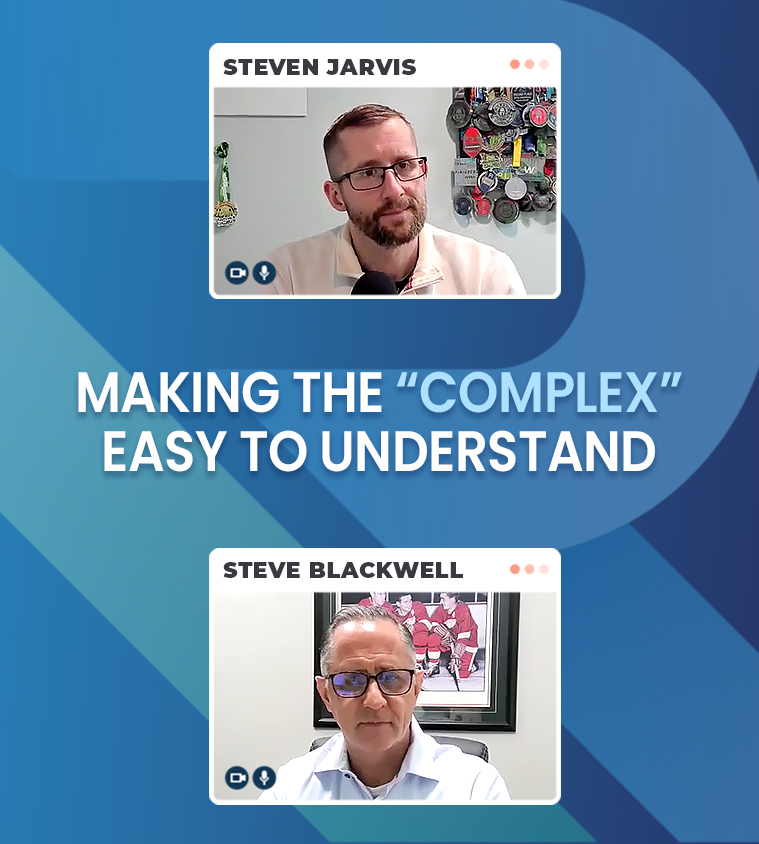
This week, Steven is joined by Steve Blackwell from Invito Energy Partners to explore the complexities, opportunities, and strategic considerations of investing in oil and gas. From understanding investment structures to navigating tax incentives, this episode gives advisors practical insights for guiding clients through these unique opportunities.
Steven and his guests share more tax-planning insights in today’s Retirement Tax Services Podcast. Feedback, unusual tax-planning stories, and suggestions for future guests can be sent to advisors@rts.tax.
Are you interested in content that provides you with action steps that you can take to deliver massive tax value to your clients? Then you are going to love our powerful training sessions online. Click on the link below to get started on your journey:
Retirementtaxservices.com/webinars
Thank you for listening.
Steven Jarvis (00:50))
Hello, everyone, and welcome to the next episode of the Retirement Tax Services podcast. I am your host, Steven Jarvis, CPA. And joining me again this week on the podcast is my good friend Steve Blackwell from Invito Energy Partners. Steve, welcome back to the show.
Steve Blackwell (01:04)
Thanks for having me back. Always a pleasure. Looking forward to the conversation.
Steven Jarvis (01:07)
Yeah, I’m always excited when we get to connect Steve, it feels even more timely. I was just at a conference about a month ago and several questions around oil and gas came up. It was a conference for financial advisors that covered a whole range of things. You weren’t there with me. So it wasn’t just that they saw your materials, but there were some of these questions coming up. And it really, for me, it fit into a bigger theme that I talked to advisors about, which is that one of the ways we deliver value for our clients is being able to explain complex topics in a simple enough way that allows our clients to take action. And so we’re going to dive into some specific examples of how that comes up. But for new listeners, for people who haven’t had a chance to meet you before, give us just a little bit of background on who you are and what you do.
Steve Blackwell (01:52)
Yeah, that’s great. Yeah. So I’m Steve Blackwell, you know, co-founder and CEO of InVvto Energy Partners. We are essentially what’s called an IDC drilling fund is what we offer. We offer two a year, one in the spring and then one that goes through the end of the year. And essentially the capital that we raise that comes in mostly through advisors is being invested directly into the oil and gas sector, which we can talk in more detail about. But that’s essentially what we do. And there’s obviously, as you know, certain benefits to that, but that’s what our expertise is.
Steven Jarvis (02:21)
Yeah. Well, and Steve, for people who haven’t heard us talking to podcasts or webinar before, I always like to share how we met because we met at another financial planning conference a couple years ago now. And what really stood out to me about my conversation with you is, I mean, with all due respect, we’ve all heard these terrible pitches from we’ll use a really broad umbrella of alternative investments of… Like it’s in your face, it’s this really aggressive sales tactic and no one really wants to engage in those conversations. And there’s that, being the tax guy, there’s that part of me that’s like, hey, if all you’re telling me is about taxes, taxes, taxes, like, but what happened to the oil and gas piece of this? And then I had a conversation with you and at least the way I remember it, you pretty much just started with, no, no, no, this is an investment. It happens to have some tax benefits, but this is still an investment. I was like, oh, finally, someone who’s just honest about what they’re doing. So I appreciated that transparency.
Steve Blackwell (03:09)
Well, because that’s essentially what it. There’s no way around that. We are asset managers, and we have an investment fund. And so it is 100 % an investment. Now there is obviously pretty substantial and unique tax pieces that go to that. But it is 100 % about, just like any other investment. You want to make money. We know how long it’s going to take you to get your capital back. What’s your return going to look like? Your clients are here to make money, not just get a write-off, because the write-off is not that good.
Steven Jarvis (03:40)
Yeah, yeah. Well, and I’m the guy who’s constantly banging the drum for let’s do the simple things consistently over time. And that’s kind of my bread and butter area of expertise. But inevitably, I regularly meet advisors who say, but but okay, great. We’re doing those things. My clients are looking for more there, whether they specifically brought up oil and gas or just other opportunities that are out there. This is an area where advisors can feel pretty quickly like they’re in over their head. And some of it is that there’s all this different terminology, taxes are complicated to begin with. And so Steve, if we use oil and gas specifically, like let’s start kind of picking apart some of the complexities that come up and then how we can better articulate these to someone who’s not as familiar with the area.
Steve Blackwell (04:21)
Yeah, and so, most advisors you meet are familiar with real estate, right? Everybody’s fairly familiar with real estate. So the analogy I always use is, it’s, you know, from an investment standpoint, it’s just like going into a commercial real estate fund and whether they’re going into multifamily, industrial, retail, whatever it is, we are taking the capital and investing it directly into the oil and gas sector, but specifically into oil and gas wells that are about to be drilled. So there are multiple ways that you could invest directly into oil and gas, or you could invest into the, if you believe in the energy sector, could buy an ETF or get into a publicly traded company, right? Excuse me. But when you invest directly into oil and gas, you’re either acquiring what’s called working interest or royalty interest. And you can buy that into wells that are already drilled. So you’re essentially like buying into a building that’s already on a rent roll, it’s already cash flowing, or you can buy it into wells that have not been drilled in the real estate example, that would be a development deal, right? There’s no cashflow yet because there’s no, if it’s a multifamily, it’s not built, there’s no renters in place yet. And so what we specifically do is only invest into what’s called working interest, which is the same thing as equity. So if you own 20 % of a building, you own 20 % of the equity in a building. In oil and gas, they just call that working interest. If you own 20 % in a well, it’s called you own 20 % working interest. And when you do that into wells that are about to be drilled, meaning they’re not already drilled or already producing or not already cash flowing, that is where you have the significant, the code has significant tax benefits associated to it. And so there are lots of oil gas funds out there. There are mineral funds that are essentially royalty funds. There are mineral funds that are buying producing wells, non-producing wells. You can get into working interest wells that are already by working interest in wells that are already cash flowing. Or you can invest specifically into wells that haven’t been drilled yet. And that’s all that we do at Invito Energy Partners, because that’s the one that offers the big upfront, what’s called the big upfront IDC deduction is what the short answer acronym for which is the Intangible Drilling Cost Deduction.
Steven Jarvis (06:19)
Yeah, so Steve, this is perfect reinforcing why I really like partnering with you on this kind of stuff is because again, we didn’t we didn’t dive into some obscure area of the tax code. It’s like, hey, this is what we do it and what we’re good at. And when you were you and I were on stage at the summit last year, and of course, we’re excited to have you coming back this fall as a partner of the summit again in this room full of advisors, you know, kind of doing this this almost like Q and more style format. Hey, like what else do we, what else do need to know? What do we need to understand? I, since I’m not on the investment side of things, it was really eye opening for me to hear all the types of questions and to see just how much, how many questions advisors have on this and how often it comes up. That it can be, depending on what corner of the internet you live in, it can be easy to kind of be lulled into this sense of, oh, well, all I need to ever do is buy an ETF and I’m set for the rest of my life. But that’s just, that’s not the reality of the complexities that we deal with. Like there’s so many alternatives out there, we need to understand where they fit in and how, like how we evaluate if this is a good idea for a client.
Steve Blackwell (07:06)
I mean, look, I always explain it this way for in terms of how we fit into an advisor’s portfolio. No different if you’re, which of course all of your clients are focused on tax strategies and clients. Otherwise they wouldn’t be part of RTS, right? And there’s obviously a ton of different strategies inside of that. But if you’re focused on adding value to your book of business through tax strategies, then oil and gas is something to understand how it works. That doesn’t mean it’s suitable for every client. It doesn’t mean it’s maybe not suitable for your book of business, but from a tax strategy standpoint, combined with the fact that it’s an investment and a tax strategy, which makes it kind of, it’s kind of got that binary benefit, it’s something to understand. And coming into 2026, we understand that learning curve can sometimes be tough. And so… We don’t have it available yet, but probably by the end of the April, we’re launching what’s called Invito University. And it’ll be basically a set of modules that any advisor, if they want to take the time, can literally go through to educate themselves on oil and gas to help them kind of get up that learning curve. And so that’s how I look at it. If you’ve got high net worth clients, high earning clients, if you’re offering tax strategy, it is something to educate yourself on. What we’re trying to do is make that as easy as possible for the advisors.
Steven Jarvis (08:16)
Yeah, well, see, let’s get into some of those kind of some of the tax pieces of this and help you. That’s super exciting that you’ve got modules coming out to go even deeper into this. But it is important if you’re going get involved in something, you’re going recommend a client get involved in something. You have this understanding of how it really works. And for me, I like to even take a step back and understand like, hey, why would there even be a different treatment for something like oil and gas compared to compared to real estate? Because real estate is a good comparison because you essentially have an upfront investment where traditionally there are physical assets involved that the IRS would want you to depreciate over a long period of time. Or in other words, they would want you to take the tax benefit over a long period of time. And I think real estate gets a lot more press coverage than oil and gas does. That could be for all sorts of reasons that we don’t need to speculate on. But one of the big limitations from a tax perspective of investing in real estate is that it’s almost universally considered passive income, which means we’ve got real limitations on how quickly we can get any of the tax benefits. That, depending on the type of oil and gas investment, there can be a real contrast in how those rules work. And this is, there’s so many weird things in the tax code. This one actually seems really simple to me. The Congress at some point said, hey, we want more people to invest in oil and gas in the United States. So let’s provide tax incentives. Like that’s about the clearest reason you can find.
Steve Blackwell (09:37)
Yeah, I mean, at end of the day, sometimes Congress literally tells you where they want you to put your money. Yeah. And this has, you know, fortunately been around for about four, four decades at this point. And it was essentially put in place to incentivize capital to flow into the development of hydrocarbons in United States, because the United States was so far independent on oil for so many years. Now, of course, that’s changed drastically over the last 15 years, but the code hasn’t changed. So that’s why it’s there. And so the big IDC deduction as it’s called, or 263C of the code, has been around for a while. So the nice part about that is tons of case law, not on the dirty dozen list of the IRS. The IRS isn’t out there targeting IDC deals. So from an audit risk standpoint, you it’s very de minimis as compared to maybe not real estate strategies, but there’s, know, I mean, you it on the real estate side, right? You’ve got to qualify either a real estate professional or you have to qualify as a, or the short-term rentals and prove material participation because the one unique aspect, what makes oil and gas, this is the piece that makes oil and gas so unique. It is a completely passive investment, but there is an exception in the passive active rules. I think it’s 469, I always write this down, C3 of the code. It’s called the at-risk rule. And that piece allows, if you come into these funds, they’re all set up as limited partnerships, but you come in while the wells are being drilled for the first 12 to maybe 16 months as a general partner, and that allows you to take this big upfront deduction, which ranges somewhere between. I just told you we’re getting K1s out before we went live, right? So our K1s, we have two funds a year. Our drill code 2025, the write-off is about 81.2%. And our opportunity fund, which is the earlier fund of the year, was literally 98.6%. So think about that.
Steven Jarvis (11:23)
Steve, when you talk about those percentages, because even for advisors, most people hear percentages and it’s the same as here in Marshmallow. So really, really what you’re talking about is the percent of the upfront investment that could be written off on the tax return in the first year. Is that fair?
Steve Blackwell (11:37)
100%. So if you were at Opportunity Fund 2025 and your client put in $100,000 just to make the math easy, their loss on their K1, which they’ll get probably tomorrow, will be $98,000. So that’ll be a $98,000 loss on page one of the K1, right? And that flows through to your scheduling into your 1040 as an above-the-line deduction of AGI. And again, but the piece that makes it so unique is that it’s truly passive. But because of that exception in the passive active rules, you’re going to be able to offset this against ordinary income. W-2, 1099, your job, your business. And that piece is honestly what makes oil and gas so unique. Because it’s truly passive. You just make the investment. You don’t have to prove material participation. You have to qualify as a real estate professional.
Steven Jarvis (12:25)
Yeah, you don’t need to dig your own well or show up at the oil fields.
Steve Blackwell (12:29)
You are not managing any aspect of this. And so that’s what makes it that additional piece. Now, you can obviously come in as a limited partner upfront and still use it to offset passive income. But I would say 95 % or more of our investors are all coming in because they have a substantial ordinary income bill that they’re trying to look for ways to minimize or reduce that liability.
Steven Jarvis (12:59)
Taxes, investing that this all like we can talk in broad strokes, but it’s always going to be specific to the individual clients. I have a friend talking to you recently and they are very specifically looking for more passive income because they have some passive losses they’re trying to. So it’s funny that you can always find exceptions to any rule. But let’s go back to this. OK, so you invest $100,000 upfront. In this particular case, you’re getting to 98 % or $98,000. You get to deductions of loss in the first year. And I’m calling this back out because I want to highlight to our listeners that this is why it’s so important that we led with this is an investment first, not a tax strategy first, because for people at home doing the math, you’re you’re probably still quickly getting to, yeah, but Stephen, if I invested $100,000, and I get a write off a $90,000 loss and then apply my tax rate to it, I’m still I’m still behind. That’s right. That’s where this is this is an investment. Yes, in year one. But, and so if someone only sold you on the tax ramifications of this, then they’ve missed really what the long-term goal is.
Steve Blackwell (13:44)
Yeah, it’s like why I earlier that if the tax benefits not that good, right? That’s why it’s 100 % of the investment first, because you just did the math right there. So call it whatever you want to call it. Be conservative and call it a 25 % return on your capital from the tax savings. Right? Well, that’s 100 grand. You’ve got 25 grand back through tax savings. if you don’t get anything beyond that, you should have just paid your tax and moved on down the line.
Steven Jarvis (14:07)
You’re still out $75,000.
Steve Blackwell (14:11)
And so that’s why it’s 100 % an investment upfront. But that’s why it’s unique because it is an investment and it does have this binary benefit of tax benefits and the expected return on it. And of course the ability to offset active income is what makes it so unique. And that it’s truly just a passive investment. You’re not happy to get involved or prove material participation. So it is 100 % an investment first.
Steven Jarvis (14:34)
And Steve, you kind of casually mentioned it there, but as the CPA on the recording here and since I’m currently doing tax returns, I feel like I need to brag for you that the fact that you’re going to get K1s out before April 15th, like you’re even more of my favorite person now. I didn’t know that before. Because so often, K1s will get automatically, or these partnership returns will get automatically extended and then you don’t see K1s until September. Clients are left like constantly wondering or guessing what the tax ramifications are. And so, you know, I love that commitment to making sure the reporting is there. And then also for people listening, especially if you have clients who are new to this or you’re new to this, this is an area you need to make sure you take the time to educate your clients. Because if the extent of their investing before has been in a qualified account or even in a taxable brokerage account, and they’re only used to getting 1099s, this is a different experience knowing that they might have to know 8 on a K1 or even just getting a K1 in general, we go from a 1099 broker statement they’re used to seeing to what 20 different boxes on a K1 that might just feel overwhelming if someone’s not expecting this. So there’s definitely room for some really great education and expectation setting.
Steve Blackwell (15:41)
Yeah, and look, we get our K1s, as I told you before we got on the call, we went live. We know that everybody’s coming in for the tax planning. So it’s incumbent upon us to get our K1s out. So we’ll always have our K1s out by the end of March, which isn’t easy to do, but we know that’s what we have to deliver. So we work on that. And you had mentioned something earlier, not that you were mentioning on purpose, but this is another example of things that I see where people maybe get misled a little bit. For example, I would never invest into an IDC drilling fund through a qualified account. And I see people pitching that. the reason why is, is you lose all the tax benefits. And so, I mean the investment’s a good investment, but why would you walk away from a 25 to maybe 35 % return upfront and, you know, use your non-qualified accounts capital liquidity to invest into it and do your qualified money into some other kind of investment, just as a really side note.
Steven Jarvis (16:35)
No, it’s a great point. wasn’t thinking, I wasn’t going to specifically call out the qualified account piece, but I was going to point out that like just because you and I are talking about, this is an investment first. That doesn’t mean you should ignore the tax benefits. We, we, the tax benefit. And so we want to make sure that we’re, we’re working with someone who’s going to take those seriously. Who’s going to make sure the reporting is done correctly, which again is why, I mean, as I go down the list of potential alternative investments and some of the tax strategies that are out there, oil and gas is one of the easier ones to explain from a standpoint of, why does this exist and how is the reporting gonna go? There’s IDCs and depletion. These are gonna be new terms for clients. But at end of the day, this is so much easier to map out for somebody than some of the other really complex strategies out there.
Steve Blackwell (17:05)
Not that the tax is easy, but it’s not really that hard, to be honest. We can get people to understand how the tax stuff works fairly easy. We spend the majority of our time explaining the investment side of it. What are the risks? What are the pros? What are the cons? What are proper expectations? And how do we, more specifically, how does InVito manage that risk? Because you mentioned earlier that you talked to lot of people and their experience, maybe they had some experience with oil and gas and it didn’t go very well. And it’s because that part of the equation was not explained correctly. And the expectations were improper and or the client really had no idea what they were getting into in terms of the risk profile. Because oil and gas, look, oil and gas is inherently from an investment standpoint, a high risk, high reward business. So when you’re investing retail capital through advisors, you really have to have a specific strategy of how you limit that downside. And that’s what we spend the majority of our time trying to educate people on. Because that’s where people get nervous. They love the tax benefits. And some people, that’s all they care about. But I mean, that’s not all they should care about. But we spend a lot of time educating on how we manage the investment side of.
Steven Jarvis (18:12)
Well, and Steve, I love that you talked about pros and cons in there. Regardless of the topic, tax strategies or otherwise, I’m just always hesitant of people who want me to believe that their solution is the answer to all things in all situations for all people all the time. It’s like, nope, nope, that’s not how life works. If you can’t explain to me when this is a bad idea, I don’t care to hear when you think it’s a good idea.
Steve Blackwell (18:34)
Yeah. I mean, look, we raise money only through RA. So they have a fiduciary relationship with their clients. So they need to understand the, you know, obviously the upside and expected returns, but they also need to understand the probability of not hitting that. And so we spend a lot of time, obviously, you know, capital principle protection is a huge part of our, we invest. And so we give up a lot of upside. And, you you chase upside deals that don’t want gas which they can happen, it’s easy to lose your money as well.
Steven Jarvis (19:02)
Yeah. Well, Steve, since you mentioned working with RIAs, and that’s a big part of why you’re a partner and a sponsor for the summit every year, because of the advisors that we bring together. But in the short term, for people who can’t make it out to the summit this year, if you go out to retirementtaxservices.com/invito, Steve has generously shared an ebook that they wrote all about investing in oil and gas for specifically for RIAs. So go to retirementtaxservices.com/invito . You can get your free copy of that to dig into this further.
Steve Blackwell 19:32)
Thanks for the plug. Yeah.
Steven Jarvis (19:34)
Absolutely. Yeah, see, this is one of those areas, I mean, like anything with tax playing like for for for us to be able to evaluate it correctly, even if you go through this and you say, Nope, that’s not for my clients. Like you owe it to your clients to understand what’s out there and to make an informed decision, not just a blanket, hey, I’m not doing any of that stuff. And so you got to take them to the time to understand these things because your client if your clients are getting information on these kinds of things, and it’s probably coming across their their their headlines at some point. If it’s all coming from the internet or social media, I can almost guarantee it’s not accurate or helpful.
Steve Blackwell (20:01)
Yeah, especially from the investment side of it. That’s the part that gets really easy to mislead. And of course, where we are today, you can only imagine the phone calls are coming like crazy, because of where oil is at today and what’s going on in the Middle East. But it has to be properly positioned. And it is just, and I say this all the time, It’s not for, it is absolutely not suitable for all clients. Even if they have a tax liability, that still doesn’t mean it’s suitable for them on the investment side. And so again, we want to give as much information and education to the advisors so they can help make that decision for their clients. And we start with the investment side of it.
Steven Jarvis (20:41
Love that. Well, Steve, as you think about how you help advisors simplify this complex topic to their clients, is there anything else that comes to mind of ways you’ve been able to, whether it’s oil and gas specific or just in general, as we help clients navigate things, like what are best practices as we have these conversations with clients?
Steve Blackwell (20:57)
You know, I think, well, one, love partnering with RTS and loved being at the conference last year because obviously the people that are there. So the first part is a lot of advisors don’t mess around with tax, right? So obviously, for us, we are looking to find those relationships with advisors that are trying to provide that service to their clients, right? But then beyond that, you also have to be an advisor who you don’t have to have never done it. We can help people that have never moved into the alternative space, but this is an alternative asset, right? And so there’s the education of that. Is that part of your portfolio? Is that part of what you offer? And so I think those advisors are really the best clients for us to hopefully get an introduction to and meet each other. And again, we’re starting to build a ton of educational content. we’ll do… Beyond that, we’ll do one-on-ones webinars with clients or advisor first of clients themselves. But it’s really just about education and how this fits into, you again, the tax part of it is kind of easy, right? I mean, if you’ve got a client, you know, tax better than I, but if you’ve got a client who’s got a big liability, and as I always say, you’ve got a client who’s in that, right? What does it go from 24 to 32 %? I mean, there’s like an 8 % delta. So anybody that’s got income in those 32 % buckets are higher you know, should be looking for ways to move out of those buckets. Those are perfect clients to look at it for. So that’s kind of easy in my opinion, but then it’s beyond that, is it a right mix for their investment portfolio? And we just help give the proper information so that, because you know, the advisors, that’s what their job is, and they know how to do that, decide if it’s suitable for their clients.
Steven Jarvis (22:27)
Yes, Steve, I love that you mentioned the other people at the summit because that it’s one of the things that I love regardless of the topic that certainly came up as we were talking about oil and gas and alternative investments. Because again, I feel like often see the impression that everyone just puts all their money in ETFs moves on. But like as we’re in that room, it’s like, OK, well, who’s who’s got clients in alternative investments? And there were a lot of hands that go up, which means that those advisors then can learn from each other. And we’re we’re so committed to putting on an incredible event. And we’ve been really pleased that that’s been the case over the last few years, and we’re excited to put on another great event this year. And that’s in part because of sponsors like you. But again, one of the things I love about partnering with you is like you came, you gave your presentation and you even encouraged, yeah, go talk to those other advisors. Don’t just take my word for it. Hear how your peers are doing this. Like make sure you can do this compliantly, that you can do it in a way that makes sense, that it fits into your systems and processes. And so at the end of the day, we talk about all the time on the podcast and everything else we do, what counts more than anything is taking action. And so being in that room to be able to learn how other people are putting this practice makes a huge difference. So if you aren’t one of the hundreds of advisors who already signed up, go out to retirementtechservices.com to get signed up for the summit because it’s gonna be an incredible experience for so many reasons. So Steve, definitely really glad that you’re a part of that.
Steve Blackwell (23:37)
Well, we’re excited about it and looking forward to, you know, obviously everybody’s really interested in about oil and gas today, for different reasons, so we’re excited for 2026.
Steven Jarvis (23:49)
Yeah, so once again, for people listening, can go to retirementtaxservices.com/invito download that guide. Steve, how else can people learn more about what you’re doing?
Steve Blackwell (23:57)
I mean, right now they could go to invitoep.com. So invitoep.com. We’ll have our our opportunity fund and our drill code funds will be open by May 1st and then the data rooms will be open. And then when you click on the current opportunities at the top, it’ll take you to the new data rooms. Right now it would take you to last year’s funds. And so, and you can also reach out to us through the website as well. You know, you’ve met Darren, who’s now part of our team, who used to be an advisor. He’s our managing director of capital markets and IR, Darren Whiston. So that’s a great new resource for us because he was an advisor. He sold his practice. He specialized in alternatives when he owned his practice. And so he’s a huge resource that my background is not being an advisor. My background is running oil and gas companies. I was the president of one oil and gas company, the CEO of another. And so I’m not the guy to ask a bunch of questions to about how do you integrate stuff like this into your practice. And so that’s a huge resource for us as well. You know, we’re looking for those, we’re just looking for the partners where we can add value.
Steven Jarvis (24:53)
Love it. Such a great attitude to have. Well, Steve, as always, appreciate your time and your expertise and for everyone listening until next time, good luck out there and remember to tip your server, not the IRS.